256Hz Frequency and Its Role in Bedside Auditory Assessment
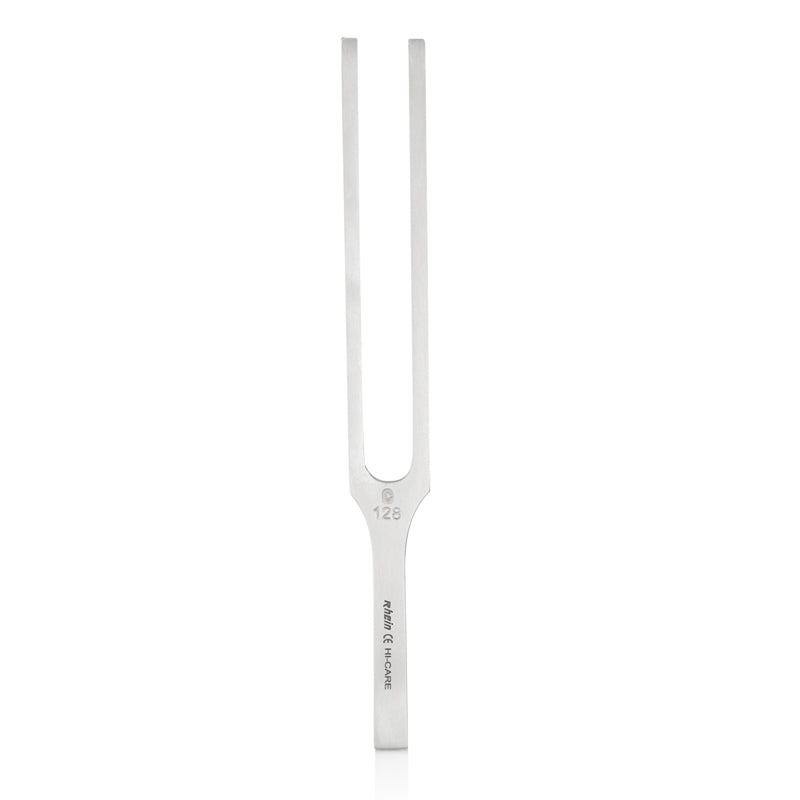
The 256Hz Tuning Fork (VM-TUN256) is a precision-machined aluminium alloy instrument designed for clinical auditory assessment using the Rinne and Weber tests — the two standard bedside examinations for differentiating conductive from sensorineural hearing loss. In the Rinne test, the vibrating fork is placed first on the mastoid process (bone conduction) and then held in front of the ear canal (air conduction); in a normal ear, air conduction is heard longer than bone conduction, while reversal of this pattern indicates conductive hearing loss on that side. In the Weber test, the fork is placed on the midline of the forehead; lateralisation of the perceived tone to the affected side suggests conductive loss on that side, while lateralisation to the unaffected side indicates sensorineural loss. Together, these two tests allow a clinician to form a preliminary assessment of hearing loss type without specialist audiometric equipment.
Weighted Tines and Frequency Selection
The VM-TUN256 includes weights on the tines, which extend the duration of sustained vibration after striking — a clinically important feature for both Rinne and Weber tests, where the tone must persist long enough for the patient to make a reliable comparison between air and bone conduction, or to identify lateralisation. The 256Hz frequency is the traditional standard for bedside hearing assessment in South African clinical practice and remains the most widely used frequency for Rinne and Weber testing, providing sufficient audibility across a broad range of patients while remaining within the range of conversational hearing. The tines should be struck gently against the palm or thigh — never against a hard surface, which risks altering the frequency or permanently damaging the tines.
Clinical Settings, Maintenance, and Availability
The VM-TUN256 is used routinely by general practitioners, ENT specialists, emergency physicians, and medical officers when a patient presents with acute or chronic hearing change, ear discharge, or suspected middle ear pathology. It is a standard component of the ENT and basic neurological examination kit for primary care and hospital settings. The instrument should be stored in a protective case to prevent tine damage and cleaned between patients with a 70% isopropyl alcohol (IPA) wipe. Available in South Africa from Vital Medical, the VM-TUN256 provides reliable, low-maintenance bedside hearing assessment for any setting requiring differentiation of hearing loss type without referral to audiology.
Technical Specifications
| Specification | Value |
|---|---|
| VM SKU | VM-TUN256 |
| Frequency | 256Hz |
| Length | 135mm |
| Weights | Yes — weighted tines |
| Material | Aluminium alloy |
| Primary use | Rinne and Weber hearing tests |
| Secondary use | Auditory screening |
| Cleaning | 70% IPA wipe |